
Procedure
Capsaicin Patch
High-concentration capsaicin patches are applied to painful skin areas by a clinician, depleting the nerve endings of substance P to reduce neuropathic pain for weeks to months.
Book a consultation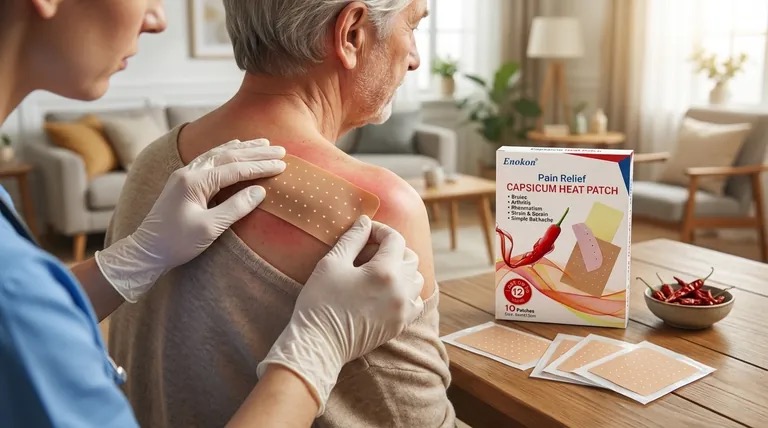
What is a Capsaicin Patch?
Capsaicin is the active compound in chilli peppers. In high-concentration medical form (8%), it works as a neuropathic pain treatment through a mechanism quite different from simple heat or counterirritant effects. When applied to the skin, capsaicin binds to the TRPV1 receptor on peripheral pain-sensing nerve endings. Repeated activation of this receptor leads to defunctionalisation of those nerve fibres: the nerve terminals lose their ability to transmit pain signals for an extended period. The result is meaningful pain reduction that outlasts the patch itself by weeks to months.
The clinician-applied patch (QUTENZA 8%) is different from the low-strength over-the-counter capsaicin creams available in pharmacies. Its high concentration requires a controlled clinical application: the patch is applied directly to the most painful skin area for 30 to 60 minutes under supervision, with a topical anaesthetic applied first to manage the initial application discomfort. It is not something patients self-apply at home.
What conditions does it treat?
Capsaicin patches are used for localised neuropathic pain conditions where the pain is confined to a defined skin territory. The two most common applications at GABA are painful diabetic neuropathy (burning pain in the feet and lower legs) and post-herpetic neuralgia (persistent burning pain along the path of a previous shingles rash). It is particularly suited to patients who cannot tolerate systemic neuropathic pain medications or who have residual localised pain despite optimised oral treatment.
What to expect
Before: The target area is identified and a numbing cream is applied in advance to reduce discomfort during the application. Tell us about any open skin, active rash, or recent wound in the treatment area, as these are reasons to delay.
During: The area is cleaned and the patch applied directly to the skin for 30 to 60 minutes depending on the body region. A warming or stinging sensation during application is expected and normal. We monitor you throughout and remove the patch after the set time. The area is then cleaned with a cleansing gel.
After: The treated skin may feel warm, red, or itchy for a day or two after the patch is removed. This is a normal local response and settles on its own. Pain relief does not appear immediately: improvement typically builds over the first one to two weeks. Relief from a single application commonly lasts three to four months; the patch can be repeated at that interval if beneficial.
Conditions this treats
Related services









Tell us what's hurting.
One consultation. One coordinated team. A plan built around your case.